Five things your landlord can't legally take from your deposit
2026-04-22 · Doug K
You've handed back the keys. The place looked fine when you left — maybe not showroom-ready, but clean and reasonable. And then the deduction list arrives.
This happens more than it should. Some landlords are testing their luck. Some genuinely don't know the rules. A few are hoping you don't.
Here's what they're not allowed to take. If you see any of these on a deduction list, you have grounds to dispute.
1. Fair wear and tear
This one is the source of more disputes than anything else, so it's worth being clear about what it actually means.
Normal use of a property leaves marks. Carpets thin and fade. Paint scuffs and dulls. Curtains lose their colour. Small marks appear on walls where furniture sat. None of that is damage — it is what happens to things when people live among them.
Your landlord took on the responsibility of maintaining and replacing the fittings in their property. Wear and tear is part of that responsibility. They cannot pass it to you.
The distinction that matters is between something that wore out and something that broke. A carpet that has thinned over a two-year tenancy is wear and tear. A carpet with a cigarette burn through the middle is damage. The first is on the landlord. The second is on you.
Adjudicators are used to making this call. They consider how long you lived there, the condition recorded at the start of your tenancy, and the age and expected lifespan of the item. A new carpet at the start of a four-year tenancy that now looks used is not a new carpet claim at checkout.
2. Cleaning they couldn't prove was needed
Cleaning is one of the most commonly claimed deductions — and one of the most commonly disputed. The rule is simple: they can only charge you for bringing the property back to the condition it was in when you moved in. Not cleaner. The same.
If the check-in inventory records a kitchen as clean and you return it dirty, that's a legitimate charge. If the check-in records describe it as "reasonably clean" and you've returned it in the same state, there's no case.
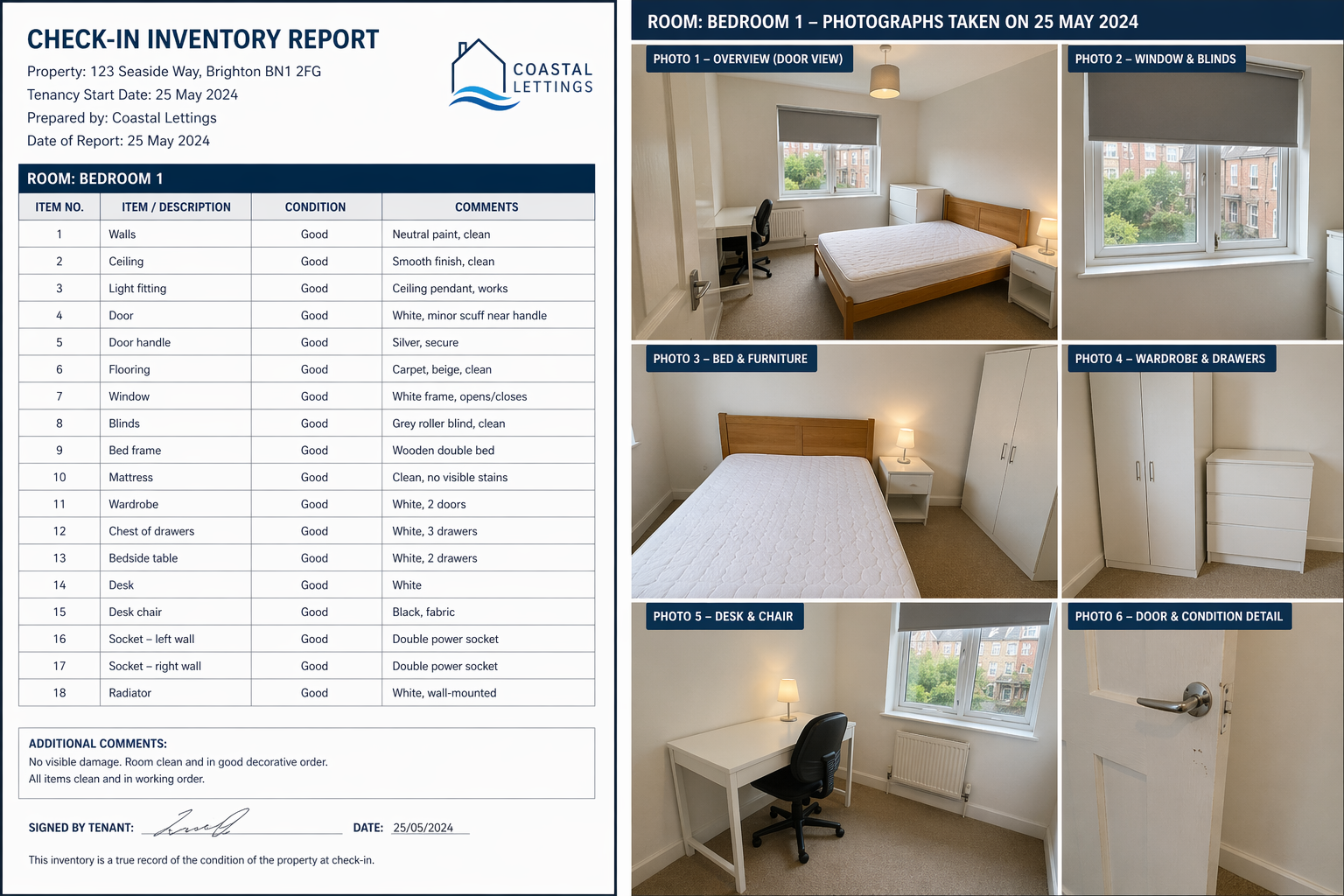
This is why the check-in document matters so much. If it doesn't exist, or it wasn't signed, the landlord has a much weaker position than they might expect. They need the baseline. Without it, they cannot show a difference — and a difference is what they need to make a claim stick.
If they're producing a professional cleaning invoice, check whether a professional clean was documented at the start. If it wasn't, ask why you're expected to fund one now.
3. Pre-existing damage
Anything that was already wrong when you moved in cannot be charged to you when you leave.
This sounds obvious. The complications come when there's no paper trail — when neither party has a check-in inventory, or when the inventory exists but the damage wasn't noted on it, or when you moved in and spotted something that never got properly recorded.
If you're currently approaching the end of a tenancy and you're reading this, the most useful thing you can do right now is pull out your check-in documents. Cross-reference the checkout against them. Anything the landlord is claiming that also appears — or should appear — in the check-in is not your liability.
If you're earlier in a tenancy and reading this as a precaution: photograph everything when you arrive, send the photos by email so they're date-stamped, and push back promptly if the check-in inventory misses something that should be on it. The record you build on day one is the record that protects you on the last day.
4. Repairs and improvements that go beyond like-for-like
When something is genuinely damaged and does need replacing, the landlord is entitled to cover the cost — but only the cost of restoring things to the state they were in, adjusted for age and condition. They are not entitled to use your deposit to upgrade their property.
The principle here is straightforward: if replacing something damaged leaves the landlord with something newer or better than what existed before, you shouldn't be paying for that difference. Adjudicators call this betterment, and they account for it. If your landlord is replacing a five-year-old appliance with a new one, they cannot charge you the full price of new. They can charge a portion — what's left of that appliance's reasonable lifespan — but not the full replacement cost.
The same applies to redecoration. If you've been in a property for three years and the walls need a repaint, some of that cost reflects normal wear over time. The landlord may have a partial claim. They don't have a full one.
Watch for invoices that quote premium replacements. A landlord who carpets a room in something significantly better than what was there before is partly improving their own asset. That part isn't yours to pay.
5. Costs with no evidence attached
An amount on a deductions list is not a deduction. It is a number. To become a legitimate deduction, it needs supporting evidence: an invoice, a receipt, a written quote, a contractor's report. Something that shows the charge is real, that the work was done, and that the amount is reasonable.
If you dispute, the scheme adjudicating your case will ask the landlord to substantiate every claim. Vague references to "general cleaning" or "maintenance work" without documentation to back them up tend not to survive that process.
You are entitled to ask for evidence before you agree to anything. If a deduction arrives without receipts or invoices, ask for them. If a landlord refuses to provide them, that tells you something useful about how confident they actually are.
What to do if you see something on this list
First: don't just accept it. A lot of people do, either because they don't know they can dispute or because they assume the landlord will win. Neither of those things is as true as it might feel.
Your deposit should be held in a government-backed scheme — Deposit Protection Service, MyDeposits, or the Tenancy Deposit Scheme. Each of those schemes has a free dispute resolution service. If your deposit wasn't protected at all, that's a separate issue with its own remedies — worth looking into before you do anything else.
You don't need a solicitor. You need your evidence: photos, dated communications, the check-in inventory, any correspondence about the items being claimed.
The adjudication process looks at the documents. If your documents support your position and the landlord's don't support theirs, the decision reflects that.
Anyhoo — the short version is this: deductions need justification, and a lot of the ones that arrive on checkout lists don't have any. Know what they can't take, ask for evidence of what they can, and use the scheme if they won't engage.
Cheers, Doug